



Hiring controls
Voicemail Disclosure Risk in Customer-Service Callbacks
A bounded review can test whether callbacks remain useful without exposing the customer’s business to shared devices and unintended listeners.
Read briefEvidence brief library, page 4
Compare roles, controls, and onboarding decisions with source context and practical operating guidance kept visibly separate.
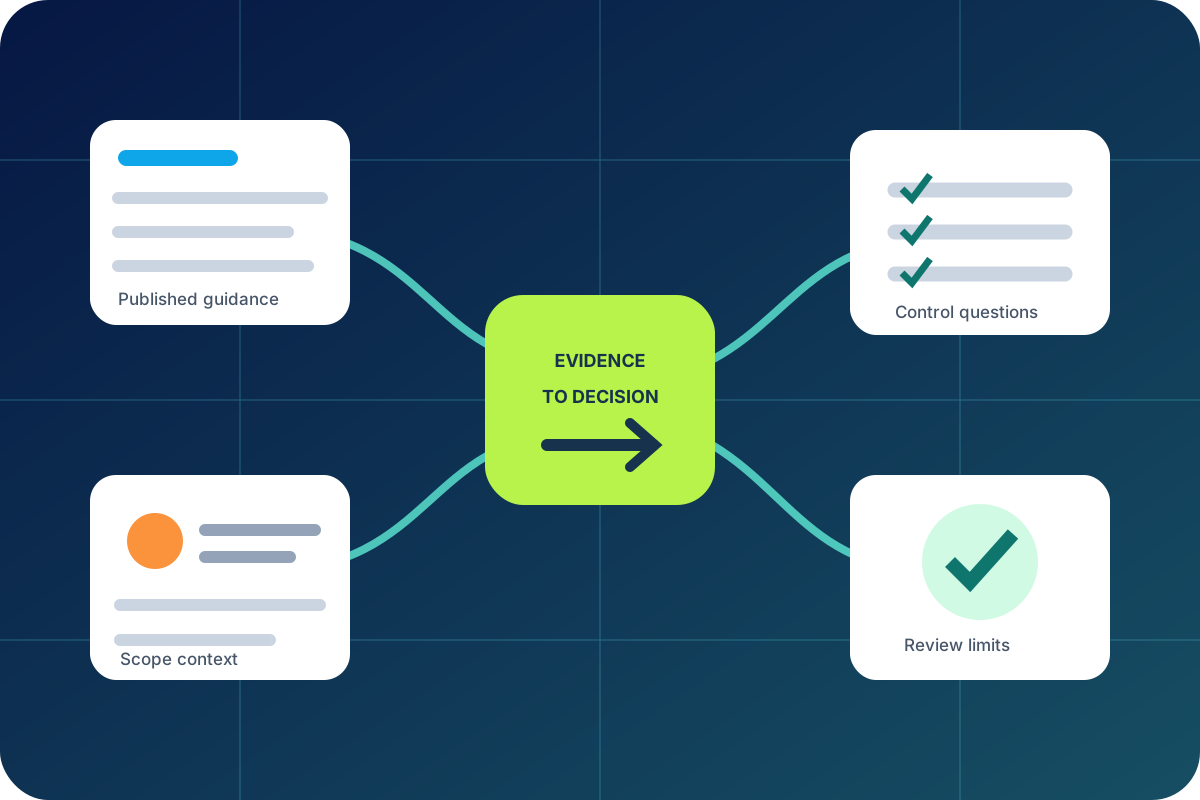
Research library
These are desk reviews, not claims of original empirical research. Source counts describe each bibliography and do not prove provider performance.
Hiring controls
A bounded review can test whether callbacks remain useful without exposing the customer’s business to shared devices and unintended listeners.
Read brief
Scope benchmarks
Attachment handling can be studied as a chain of receipt, access, extraction, forwarding, retention, and owned deletion.
Read brief
Workflow design
Transfer rate alone says little about whether verified context, a customer promise, and accountable ownership survived the move.
Read brief
Hiring controls
Hold duration alone misses whether the caller received a clear return, a sourced answer, and an owned next step.
Read brief
Scope benchmarks
A linked-contact review can show whether customers return because a promise lacks a visible, accepting owner.
Read briefWorkflow design
A field-level study can locate where a verified correction stops, conflicts, or expands beyond its stated purpose.
Read briefHiring controls
Search success is not answer reliability when the returned article is stale, premature, or outside the customer’s scope.
Read briefScope benchmarks
Shift coverage is credible only when due callbacks and updates remain visible, accepted, and safe to complete.
Read briefWorkflow design
A linked-record study can show when one customer need becomes competing tasks, owners, and promises.
Read brief
Hiring controls
Callback performance is interpretable only when the promised window and actual attempt use the same customer-facing clock.
Read brief
Scope benchmarks
A bounded review can identify where customer files travel beyond the people and systems needed for the stated service purpose.
Read briefWorkflow design
The useful measure is not simply specialist presence; it is whether boundary cases retain an owner and a truthful update path during absence.
Read briefHiring controls
A cross-system cohort can test whether a customer survey choice survives channel switches without being mistaken for a broader contact preference.
Read brief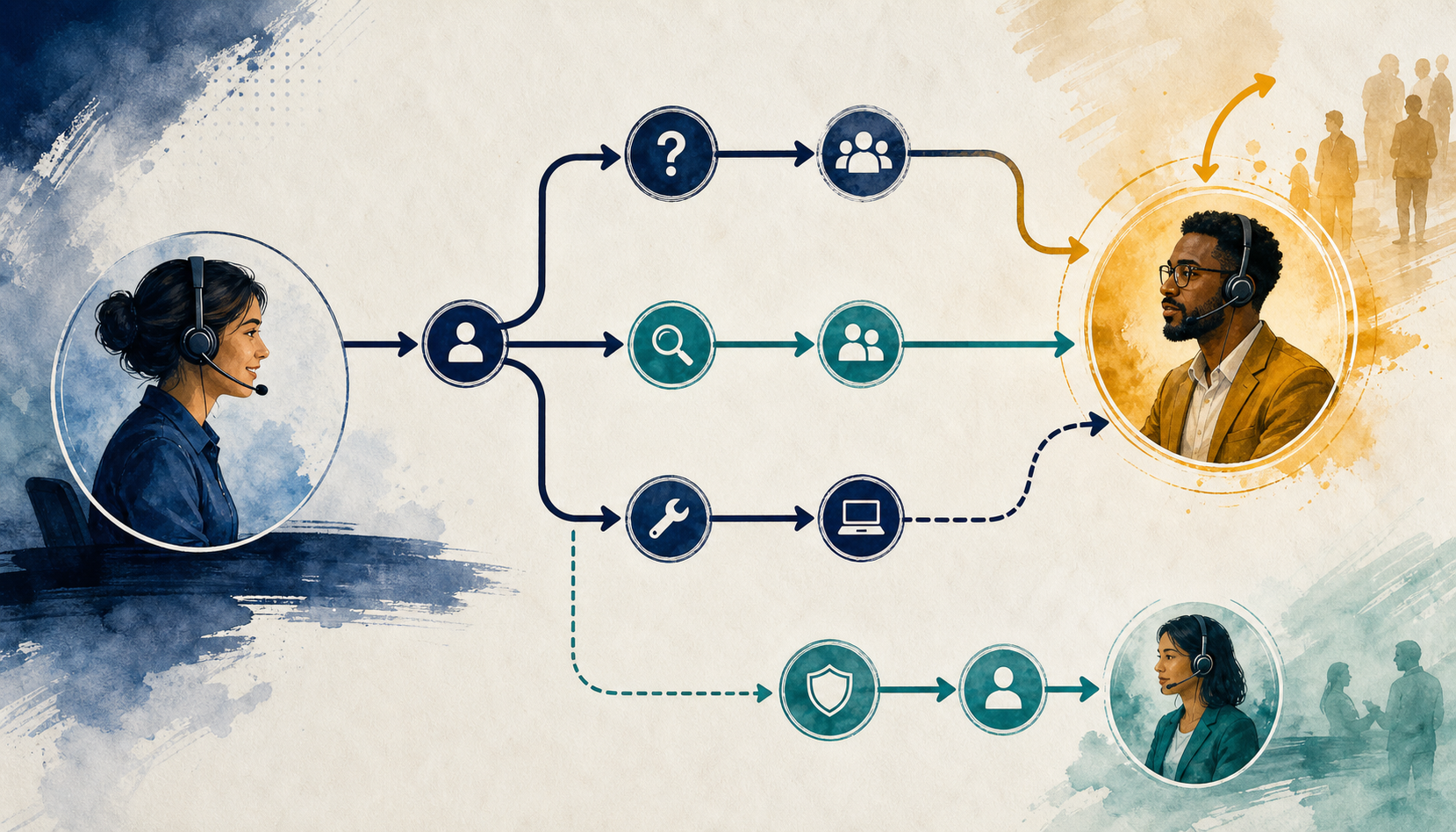
Scope benchmarks
A paired-record study can show whether dropped and rejected transfers regain an owner before the customer has to start again.
Read briefWorkflow design
Message counts hide whether an overnight customer request reached an authorized owner during the next staffed period.
Read briefHiring controls
Reopened-ticket research should measure what the next worker can recover from the record, not simply count how often a status changes.
Read brief
Scope benchmarks
A blinded consistency review can test whether completed, transferred, voicemail, and follow-up codes agree with the underlying contact record.
Read briefWorkflow design
A changed callback number affects identity, consent, timing, and delivery, so audit evidence needs more than a before-and-after field value.
Read briefHiring controls
A transfer log can show movement without showing whether the receiving role understood and accepted the customer’s unresolved need.
Read briefScope benchmarks
A voicemail attempt reaches a device, not necessarily the intended customer, so disclosure and promise evidence need separate treatment.
Read briefWorkflow design
Cases that reenter a queue can look new in operational reports even when the customer’s original wait never stopped.
Read briefHiring controls
Screen-share research should test where unnecessary viewing begins, how quickly support stops, and what the operation records afterward.
Read briefScope benchmarks
Apparent duplicate callbacks need case-level comparison because the same customer and phone number can still represent different promises.
Read brief
Workflow design
An escalation has not changed hands until an authorized receiving owner has acknowledged it.
Read briefEach brief lists the sources consulted, makes assumptions visible, and separates sourced facts from editorial recommendations. A listed source count describes the bibliography. It is not a claim of original empirical research, a legal opinion, or proof that one provider will achieve a particular result.