



Hiring controls
After-Hours Decision Coverage for Outsourced Call Centers
Extended answering hours are useful only when customers can reach the decisions their cases actually require.
Read briefEvidence brief library, page 5
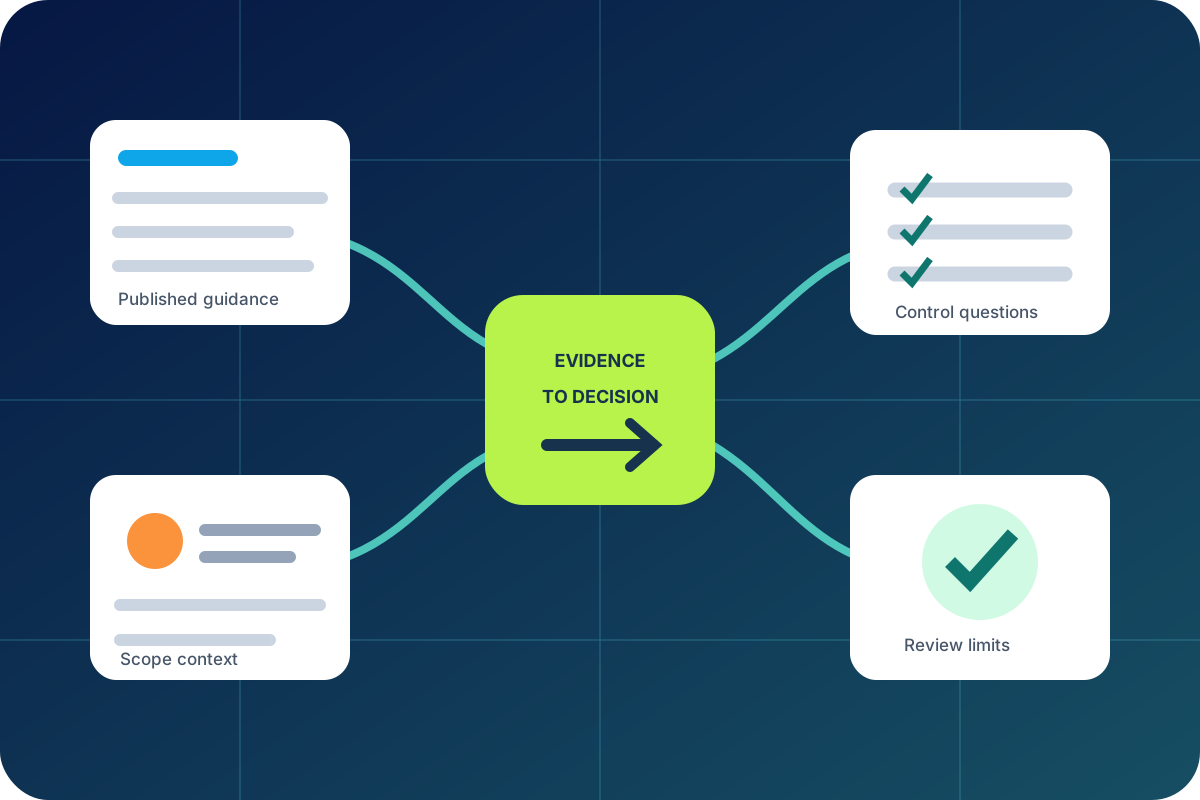
Compare roles, controls, and onboarding decisions with source context and practical operating guidance kept visibly separate.
Research library
These are desk reviews, not claims of original empirical research. Source counts describe each bibliography and do not prove provider performance.
Hiring controls
Extended answering hours are useful only when customers can reach the decisions their cases actually require.
Read brief
Scope benchmarks
A promised update is credible only when every required dependency has an owner and a feasible sequence.
Read brief
Workflow design
A transfer succeeds when the next authorized worker can continue the customer’s purpose without reconstructing it from scratch.
Read brief
Hiring controls
An approved exception can quietly become an unofficial rule when scope, expiry, and decision ownership are not preserved.
Read brief
Scope benchmarks
Backlog risk grows when age, customer impact, dependency, and accountable ownership are separated.
Read brief
Workflow design
Publishing new guidance does not prove that the effective shift received, understood, and applied the approved change.
Read brief
Hiring controls
Callback performance depends on the promised window, approved channel, verification boundary, attempt outcome, and next owner.
Read brief
Scope benchmarks
Coverage can appear sufficient in aggregate while a single skill, system, decision owner, or interval remains exposed.
Read brief
Workflow design
A completed control is dependable only when the source, action, result, reviewer, exception, and follow-up ownership remain traceable.
Read brief
Hiring controls
Intraday demand variance is useful only when arrivals, handle time, backlog, shrinkage, and channels share a defined interval.
Read brief
Scope benchmarks
A complete shift handoff preserves open work, customer promises, blockers, evidence, and acceptance by the next owner.
Read brief
Workflow design
Escalation latency contains two clocks: time to owner acknowledgment and time to an authorized decision or safe next action.
Read brief
Hiring controls
Promise fulfillment connects the commitment, customer time zone, channel, due window, dependency, owner, and final outcome.
Read brief
Scope benchmarks
A daily control review should test live operating risks and produce named decisions instead of repeating dashboard totals.
Read brief
Workflow design
An escalation target is useful only when the clock, severity, receiving owner, and acknowledgment event are defined. NIST CSF 2.0 supports assigned response responsibilities and outcome-based governance; it does not prescribe a universal call-center response time.
Read brief
Hiring controls
Rework is hidden when teams count only closed contacts. ISO contact-centre guidance emphasizes processes and service outcomes, while NIST frameworks emphasize measurement that supports governed decisions; neither source supplies one universal rework formula.
Read brief
Scope benchmarks
NIST Zero Trust Architecture evaluates access per subject and resource, and NIST identity guidance relies on accountable authenticators. Shared credentials weaken attribution, complicate offboarding, and make least-privilege access harder to enforce.
Read brief
Workflow design
A quality appeal is more consistent when the original interaction, rubric version, scored observation, reviewer rationale, and final decision remain linked. ISO 18295 provides customer-contact operating context, while NIST governance principles support documented roles and repeatable review.
Read brief
Hiring controls
NIST CSF 2.0 includes response and recovery outcomes, supporting tests that examine communications, alternate access, queue priorities, and restoration ownership. A continuity plan is not demonstrated by the existence of a document alone.
Read brief
Scope benchmarks
A customer-contact queue can answer promptly while a pending client decision quietly becomes the real source of delay.
Read brief
Workflow design
Language support is reliable only when the customer intent, uncertainty, authority limit, and next action survive the handoff.
Read brief
Hiring controls
A callback record needs purpose, channel, timing, and scope so permission for one support contact is not treated as permission for every future use.
Read brief
Scope benchmarks
Service recovery is safer when frontline support can acknowledge impact and route a remedy without inventing a credit, refund, or policy exception.
Read brief
Workflow design
Repeat contact is a signal to investigate, not proof that the first worker failed or that the customer was difficult.
Read briefEach brief lists the sources consulted, makes assumptions visible, and separates sourced facts from editorial recommendations. A listed source count describes the bibliography. It is not a claim of original empirical research, a legal opinion, or proof that one provider will achieve a particular result.