



Hiring controls
Dispute-Pause Handoffs in Collections Reminder Calls
A reminder lane needs a clear stop-and-handoff path when the customer disputes the person, amount, status, authority, or communication preference.
Read briefEvidence brief library, page 3
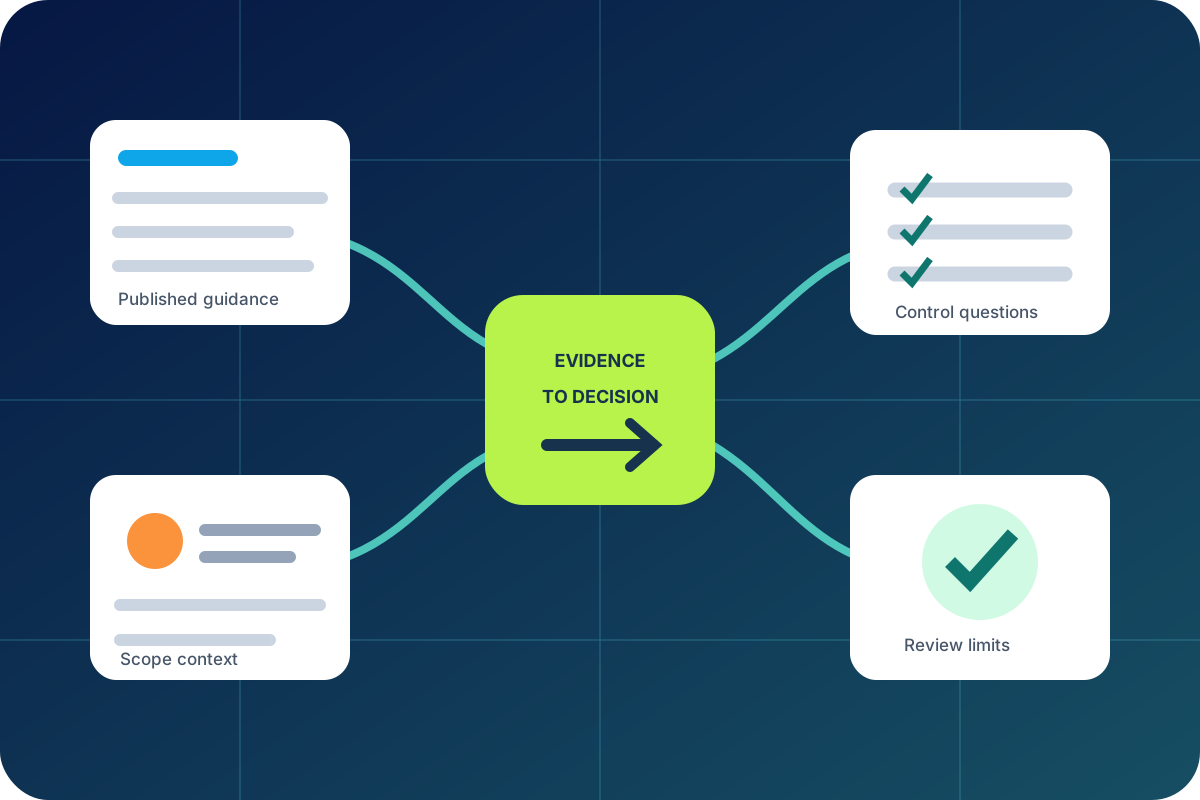
Compare roles, controls, and onboarding decisions with source context and practical operating guidance kept visibly separate.
Research library
These are desk reviews, not claims of original empirical research. Source counts describe each bibliography and do not prove provider performance.
Hiring controls
A reminder lane needs a clear stop-and-handoff path when the customer disputes the person, amount, status, authority, or communication preference.
Read brief
Scope benchmarks
Coaching needs enough interaction evidence to improve a defined behavior without turning customer records and recordings into an informal training archive.
Read briefWorkflow design
A continuity plan becomes operational evidence only when a realistic exercise proves that customer contacts, authority, records, and recovery decisions survive the failover.
Read brief
Hiring controls
A call-center transition is complete only when customer work, knowledge, access, records, and unresolved promises reach an authorized successor and the former provider can no longer act.
Read brief
Scope benchmarks
An AI-suggested answer is usable only when the representative can see its approved source, effective context, uncertainty, and authority boundary before speaking to a customer.
Read brief
Workflow design
During an outage or security incident, customer updates are dependable when observed facts, approved language, update cadence, and decision ownership stay synchronized.
Read brief
Hiring controls
A support queue resists impersonation when identity evidence, request risk, channel history, and escalation rules outweigh urgency, familiarity, or a convincing story.
Read briefScope benchmarks
Account recovery should be treated as a high-impact identity event with approved evidence, notification, throttling, and a named decision owner - not as an improvised verification quiz.
Read brief
Workflow design
A payment-call control is credible only when recording suppression, system scope, failure alerts, access limits, deletion evidence, and customer routing can be reconstructed.
Read brief
Hiring controls
A multilingual handoff should preserve the customer’s requested language, communication mode, verified facts, unresolved questions, and decision owner without treating fluency as authority.
Read briefScope benchmarks
A refund answer is reliable only when the request, order facts, policy version, authority limit, approval event, payment state, customer promise, and final outcome remain linked.
Read briefWorkflow design
A staffing forecast becomes decision-grade when demand, interval assumptions, shrinkage, service objectives, exceptions, and forecast error can be reproduced without converting uncertainty into a headcount promise.
Read briefHiring controls
A disconnect study should test transaction state, reconnect permission, ownership, and customer continuity instead of counting dropped calls alone.
Read brief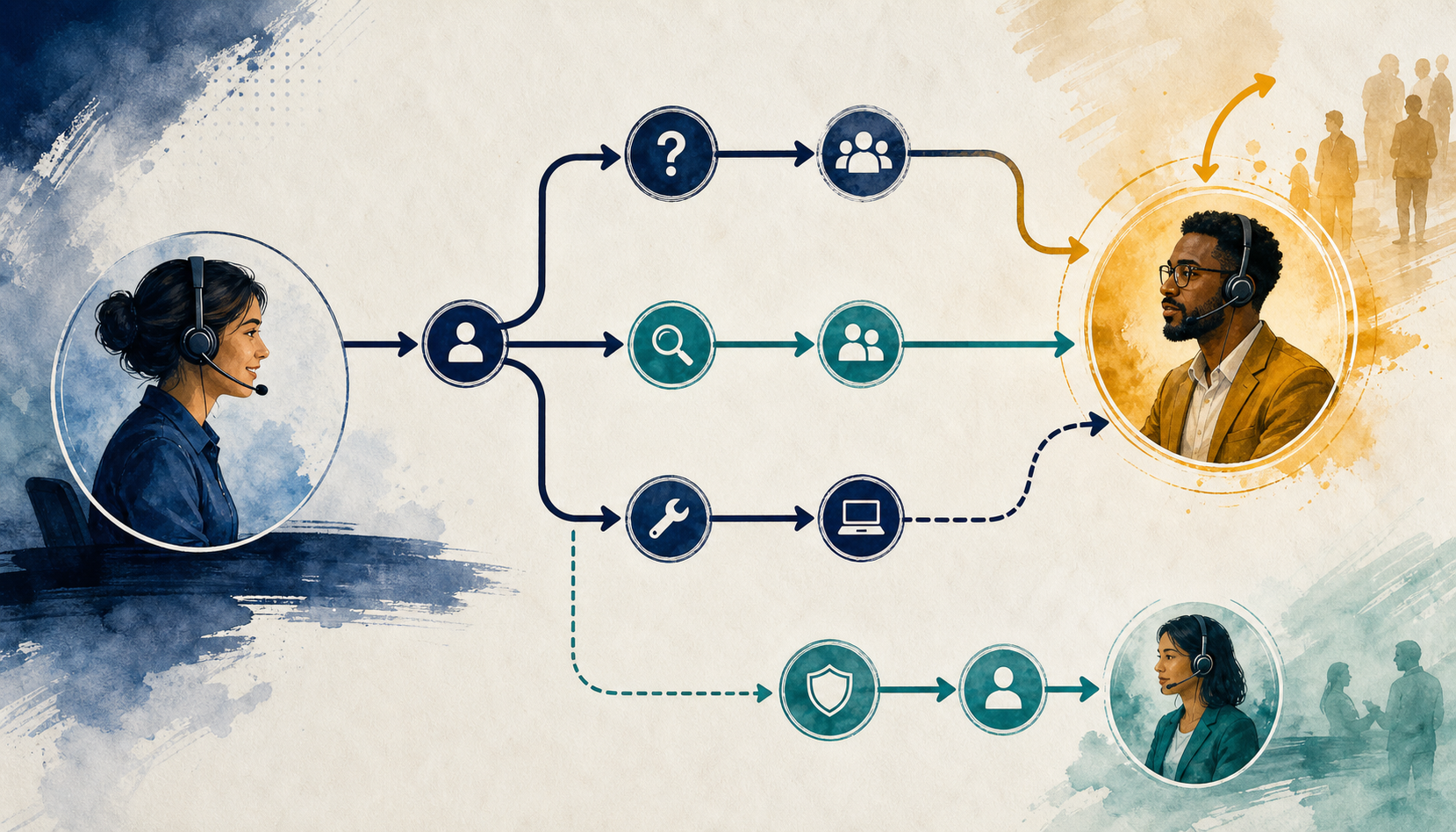
Scope benchmarks
Coverage should be measured by whether authorized decisions are accepted in time, including cases still open when the reporting period ends.
Read briefWorkflow design
A bounded review can test whether callbacks remain useful without exposing the customer’s business to shared devices and unintended listeners.
Read briefHiring controls
Attachment handling can be studied as a chain of receipt, access, extraction, forwarding, retention, and owned deletion.
Read brief
Scope benchmarks
Transfer rate alone says little about whether verified context, a customer promise, and accountable ownership survived the move.
Read briefWorkflow design
A disconnect study should test transaction state, reconnect permission, ownership, and customer continuity instead of counting dropped calls alone.
Read briefHiring controls
Coverage should be measured by whether authorized decisions are accepted in time, including cases still open when the reporting period ends.
Read briefScope benchmarks
A bounded review can test whether callbacks remain useful without exposing the customer’s business to shared devices and unintended listeners.
Read briefWorkflow design
Attachment handling can be studied as a chain of receipt, access, extraction, forwarding, retention, and owned deletion.
Read briefHiring controls
Transfer rate alone says little about whether verified context, a customer promise, and accountable ownership survived the move.
Read briefScope benchmarks
A disconnect study should test transaction state, reconnect permission, ownership, and customer continuity instead of counting dropped calls alone.
Read briefWorkflow design
Coverage should be measured by whether authorized decisions are accepted in time, including cases still open when the reporting period ends.
Read briefEach brief lists the sources consulted, makes assumptions visible, and separates sourced facts from editorial recommendations. A listed source count describes the bibliography. It is not a claim of original empirical research, a legal opinion, or proof that one provider will achieve a particular result.